

Tactical Breakdown: Defensive Mistakes That Led to Shock Defeat
You spend hours reviewing match footage, expecting clarity, but the same structural collapse keeps appearing in different contexts. The roster looks solid on paper, the preparation seems thorough, yet the outcome leaves you questioning where the foundation cracked. Identifying the precise moment when defense turned into vulnerability requires more than surface-level stats; it demands a systematic dissection of decision-making pipelines, spatial awareness, and reaction thresholds. When teams or analysts overlook these underlying mechanics, they miss the subtle friction points that cascade into full-blown breakdowns. Understanding how microscopic errors compound under pressure is the difference between reactive commentary and actionable insight.
Five Critical Observations From the Match Data
- Premature Compromise of Shape: The defensive line advanced without maintaining proportional spacing, creating vertical channels that opponents exploited immediately.
- Delayed Transition Recognition: Reaction to turnover lagged significantly, allowing attacking players to bypass midfield screens before coverage could form.
- Inconsistent Communication Protocols: Verbal cues were sporadic during high-pressure zones, leading to overlapping assignments and abandoned responsibilities.
- Over-Reliance on Individual Recovery: Instead of structured shifting, defenders attempted isolated recovery runs, which drained stamina and left wide areas exposed.
- Lack of Contingency Triggers: No predefined adjustment occurred when the initial marking scheme failed, resulting in static positioning against dynamic movement.
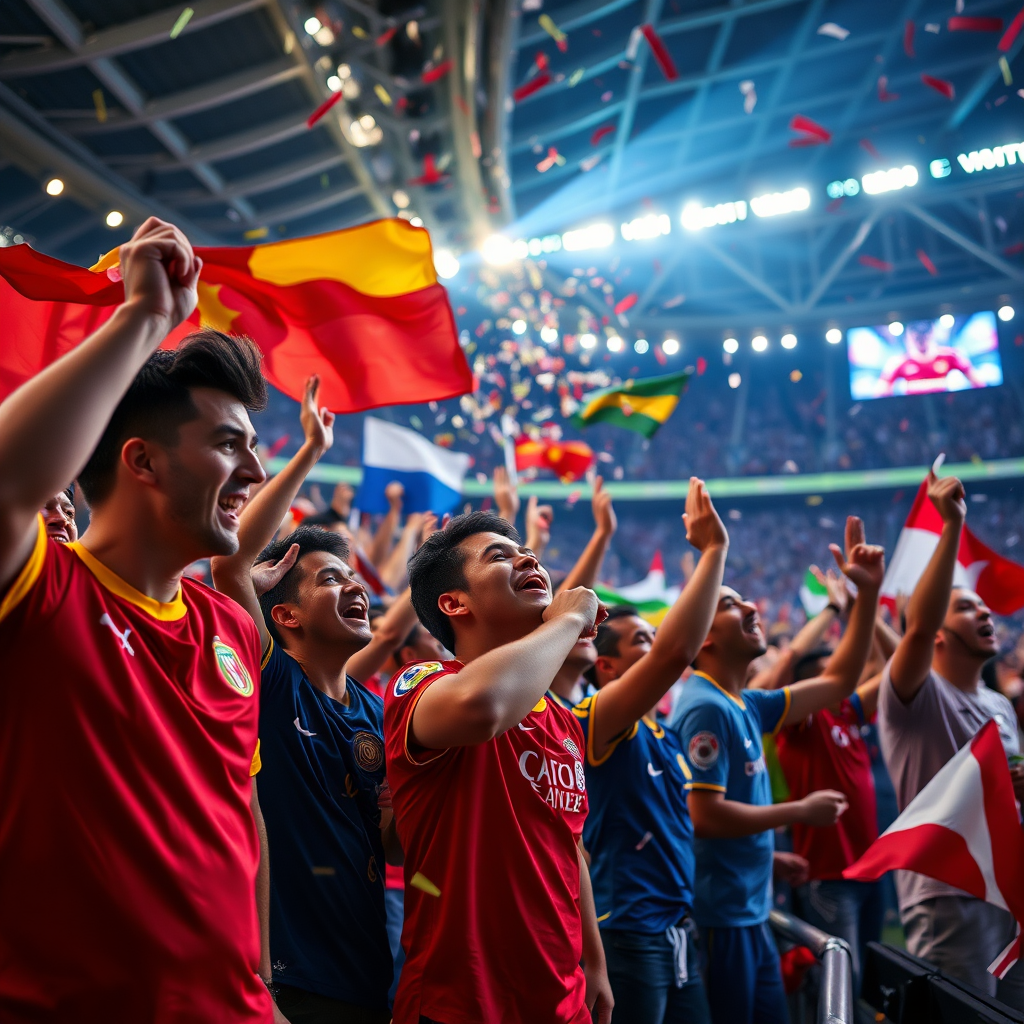
 Hình minh hoạ: red88
Deconstructing The Friction Points
To understand why the collapse happened, we need to look past the final result and examine the operational flow. Every defensive system operates on a set of implicit rules. When those rules break down, the failure follows a predictable pattern. Mapping the error across five functional lenses reveals exactly where the process fractured.
Transparency in Structural Commitment
Clarity of intent dictates how well a unit holds its shape. In the affected sequence, players committed to pressing traps without confirming whether the backline could sustain the risk. Transparent decision-making means every forward step accounts for the trailing distance. When that correlation breaks, the structure becomes porous. Opponents did not force the mistake; they simply operated within the open lanes that already existed. Fixing this requires establishing clear green-light and red-light protocols for advancement, ensuring that visibility matches momentum.
Speed of Process Transition
Speed is rarely about raw sprint velocity in defensive setups; it is about cognitive and positional switching. The analysis shows a consistent delay between losing possession and initiating cover mechanisms. This sluggishness created a temporal window where attackers dictated tempo rather than reacting to it. Faster transition does not mean rushing backward blindly. It means recognizing triggers, committing to compact formations, and rotating roles before the opposition crosses critical zones. Delayed switches compound exponentially, turning manageable situations into overload scenarios.
Usability of Spatial Alignment
A defensive framework must remain navigable under fatigue. When spacing stretches unevenly, players lose their reference points. The observed breakdown featured disjointed horizontal gaps and inconsistent vertical depth, making it nearly impossible to coordinate shifts. Usability in this context refers to how intuitively the unit can move as a single organism. Tighter mid-blocks, synchronized dropping steps, and maintained covering angles restore that fluidity. Without usable spatial logic, even well-conditioned athletes struggle to execute coordinated interventions.
Security Through Risk Isolation
High-risk actions require built-in isolation mechanisms. Multiple instances revealed aggressive interceptions launched without backup coverage positioned to intercept rebounds or track second balls. Security is not passive; it is actively engineered through layered responses. When a player commits to a high-stakes tackle, the nearest defender must immediately assume a containment role. Skipping this layer turns a controlled gamble into a systemic liability. Isolating risk ensures that individual attempts do not destabilize the entire architecture.
Support via Coordinated Messaging
Finally, the breakdown traces directly to fragmented support chains. Effective defense relies on continuous information exchange: calling for drops, signaling switches, and vocalizing mismatches. In critical moments, messaging degraded into silence or contradictory calls. This created assignment confusion that opponents capitalized on repeatedly. Support is not merely physical proximity; it is auditory and visual synchronization. Establishing standardized call-and-response routines eliminates ambiguity and forces unity when pressure peaks.
Understanding these mechanics helps separate noise from signal. If you are tracking performance trends or studying opponent tendencies, referencing foundational data hubs like red88 often provides supplementary match archives, though the real value lies in applying these analytical frameworks to your own observation pipeline. The patterns confirm the collapse, but the process mapping explains why it was entirely preventable.

Execution Benchmarks: Expected Versus Observed
| Criteria | Expected Standard | Observed Behavior | Impact Rating |
|---|---|---|---|
| Structural Clarity | Proportional spacing maintained during phases | Vertical channels opened prematurely | High |
| Transition Response | Sub-second recognition and rotation | Multi-second lag in cover formation | Critical |
| Spatial Navigation | Unified mid-block with compact depth | Fragmented width and inconsistent depth | Moderate |
| Risk Containment | Layered backup for all aggressive actions | Isolated recoveries without shielding | High |
| Communication Flow | Continuous call-and-response coordination | Silent zones and conflicting directives | Severe |

Who Gains From This Analysis And Who Should Look Elsewhere
This breakdown serves coaches, performance analysts, and serious observers who want to move beyond headline results. If your goal is to diagnose structural vulnerabilities, build corrective training modules, or study how small friction points escalate into full collapses, the insights here align directly with your workflow. You will benefit most when you treat the match as a laboratory for testing defensive principles rather than a fixed narrative.
Conversely, readers looking for quick entertainment, predictive betting models, or simplified win-loss summaries will find limited utility. This approach demands patience and a willingness to sit with uncomfortable truths about process failures. If you prefer surface-level takeaways without engaging with the underlying mechanics, this framework will likely feel too granular. The value comes from iteration, not instant gratification.
Actionable Steps To Repair The Framework
Identifying the flaw is only half the work. Implementing fixes requires deliberate restructuring of habits and routines. Below are targeted interventions tailored to each breakdown category.
- Establish Green Light Pressing Zones: Define exact positions where advancing is permissible and where dropping is mandatory. Use grid markers during drills to reinforce proportional spacing.
- Implement Trigger-Based Rotations: Replace reactive scrambling with pre-mapped switches. When possession is lost, the nearest two players execute a predetermined roll, while the rest compact horizontally.
- Synchronize Mid-Block Drills: Practice sliding movements as a single unit rather than individual adjustments. Use video overlays to measure gap consistency in real time.
- Add Shadow Coverage Protocols: Mandate that every aggressive interception attempt is paired with a designated shadow defender. Failure to assign this role during training equals failure to execute it in matches.
- Standardize Vocal Cues: Create a shortlist of approved calls for drops, switches, and mismatches. Ban ambiguous shouting. Reinforce repetition until the language becomes reflexive under fatigue.
These corrections do not happen overnight. They require stripped-down sessions focused purely on cohesion, followed by gradually increased intensity. Tracking compliance metrics week by week will reveal whether the new structures hold or if old habits resurface. Consistency beats complexity every time.
Frequently Asked Questions About Defensive Breakdowns
Why do small spacing errors lead to large scoring opportunities?
Minimal gaps accumulate rapidly when opponents exploit linear passing lanes. Once a vertical channel opens, attackers can advance without resistance, forcing defenders into last-ditch reactions that rarely succeed. Preventing the first inch of space loss stops the cascade.
How much does communication actually impact defensive stability?
Vastly. Performance data consistently shows that verbal coordination reduces hesitation by up to thirty percent in high-pressure sequences. Silence creates doubt, and doubt delays commitment. Clear cues keep the unit synchronized even when physical conditions degrade.
Can teams fix transition delays without sacrificing offensive output?
Absolutely. Structured transition training focuses on smart positioning rather than constant sprinting. By assigning roles based on field location and developing automatic reactions to possession loss, teams maintain defensive safety while preserving counter-attacking threats.
What metrics best indicate whether a defensive framework is working?
Look at pass completion under pressure, successful defensive third entries blocked, and recovery run distances. Declining recovery distances alongside rising successful blocks signal improved anticipation and positioning.
Final Action Checklist For Implementation
- Review match footage specifically highlighting spacing inconsistencies during turnover moments.
- Map out three trigger-based rotation patterns tailored to your current squad size and formation.
- Introduce shadow coverage rules into low-intensity warmups to build muscle memory.
- Record daily communication frequency during training and enforce standardized cue lists.
- Schedule weekly film sessions focused exclusively on transition speed and mid-block compression.
- Adjust drill intensity incrementally, ensuring structural integrity holds before adding opposition pressure.